
Natural Movement and the
Combat Athlete
Why putting the athlete at the center changes every coaching decision—from medicine ball throws to ground transitions.
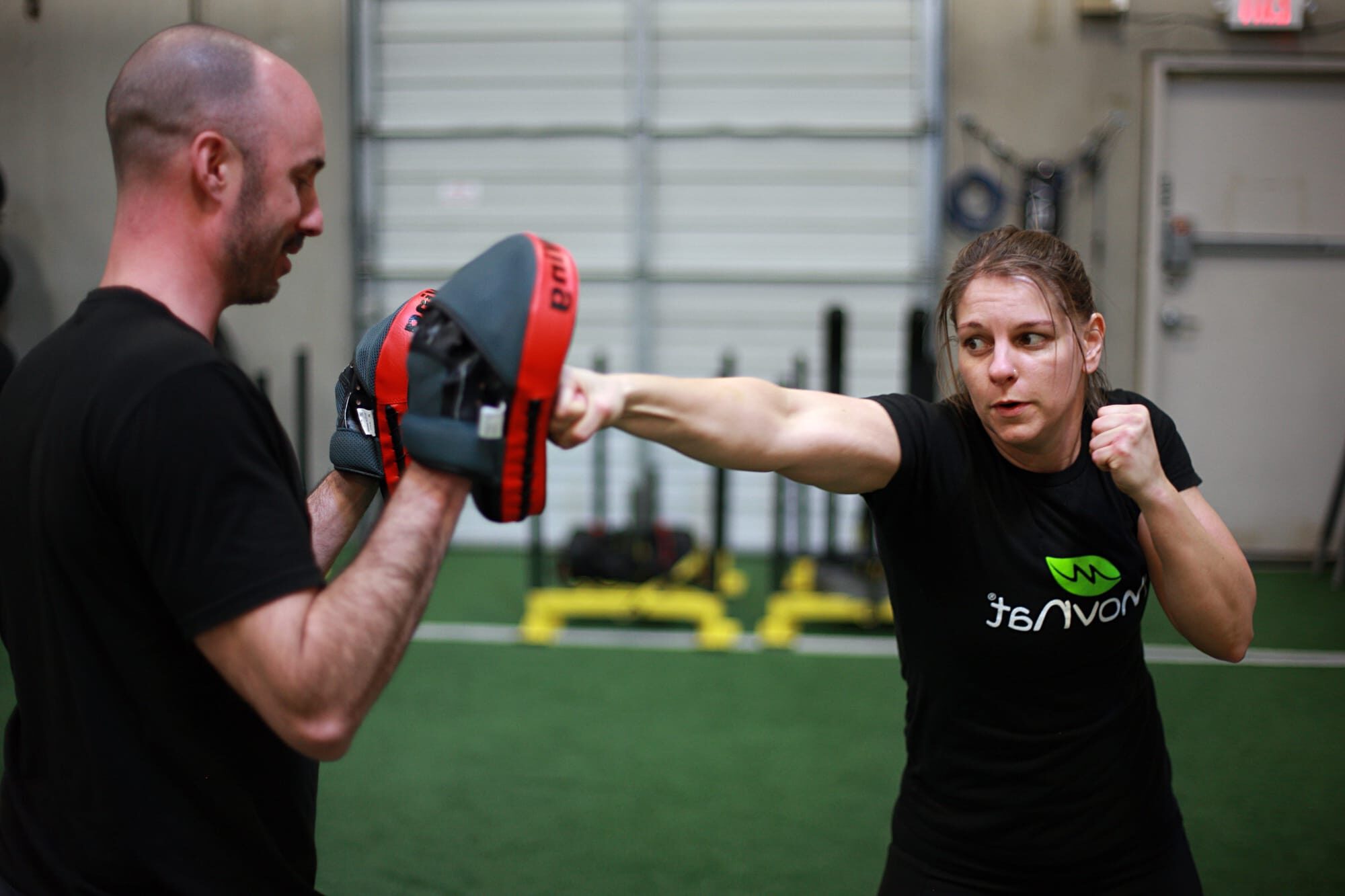
The Question of Center: Tool vs. Athlete
Put a barbell at the center of a training program, and the first question can easily become which barbell exercises the athlete should perform. Put the athlete at the center, and the first question changes: what does this person need to become better able to do?
That difference is more important to me than whether we use a barbell, a kettlebell, a medicine ball, or the floor. It determines how I assess the athlete, select movements, introduce load, and decide whether a session is serving its purpose.
Case Observation: Dominic Rodriguez & Angelica Delgado
Their job is judo. On the tatami, they manage intense unpredictability: grips break unexpectedly, centers of gravity shift in milliseconds, and the floor is constantly both a collision point and an escape route. Our supplementary training exists solely to develop physiological and movement capability without displacing their combat practice or exhausting their central nervous system.
When equipment sits at the focal point, training tends to organize around the constraints of that equipment. Movements are chosen because they belong to the canon of that tool, loads are prescribed according to standard percentages of predetermined maximums, and progress is measured primarily by weight on that implement. When the human athlete sits at the focal point, the human organism’s movement demands, fatigue state, and adaptive priorities dictate every parameter.
The 5-Step Athlete-Centered Framework
To move past rigid implement-first dogmatism, physical preparation must follow a systematic decision cascade that responds dynamically to performance realities.
Understand the Person
Consider their primary sport demands, detailed training history, current physiological readiness, tissue status, and external psychological demands.
Assess Competency
Evaluate what they can accomplish under fatigue, discover joint compensations, and pinpoint exactly where movement problems emerge.
Select Movement
Choose a useful developmental task that offers immediate, transferable neurological stimulus rather than isolated muscular exhaustion.
Choose Constraints
Shape the physical challenge by adjusting posture, degree of body support, spatial boundaries, equipment geometry, and external load.
Observe & Adjust
The athlete's live motor response informs the very next step. If compensatory patterns emerge or mechanical efficiency collapses, regress the constraint immediately.
External vs. Internal Load: Sandbags & Medicine Balls
Training science distinguishes between external load—the objective work performed—and internal load, the physiological and psychological demand experienced by the individual.
Take the common example of a 100-pound sandbag carry. A workout spreadsheet may label this as simple ‘power endurance work’ for an entire squad. Yet to a 135-pound flyweight judoka, that 100-pound bag represents nearly 75% of their total body mass, demanding extreme axial stabilization, maximal diaphragmatic compression, and severe cardiovascular strain. To a 250-pound heavyweight, that same external load may barely touch threshold aerobic conditioning.
Similarly, consider throwing a 20lb medicine ball. For a lightweight combat athlete, accelerating that implement against gravity requires near-maximal recruitment and explosive torque, while for a super-heavyweight it functions primarily as a light reactive coordination drill. Starting numbers on an implement must never replace careful assessment of the mover.
Biology, Adaptation & Meaningful Skill Progression
Progressing an athlete through a kneeling hip hinge from bodyweight to 4kg and then 8kg is not just about adding resistance; it is about assessing whether they maintain spinal organization and hip hinge mechanics under increasing rotational and shear challenges. If an athlete compensates by flaring their ribs or hyperextending their lumbar spine, the heavier load is reinforcing a breakdown rather than building strength.
The 500-Meter Rowing Analogy
A 500-meter rowing test gives an objective time, but if the athlete finishes with collapsed thoracic posture, rounded shoulders, and inefficient cadence, the test measured their willingness to suffer rather than their mechanical competency. In combat preparation, how movement is accomplished matters just as much as completing the task.
This reinforces why ongoing assessment during every session is far superior to single-day testing snapshots. When combat athletes arrive directly after a grueling multi-day judo camp, their nervous system and tissues are already depleted. An inflexible percentage-based template would demand heavy spinal loads, risking injury; an athlete-centered coach autoregulates the day's training toward regenerative ground sequences, decompression, and reactive balance.
Progression in Practice: Throws & Ground Transitions
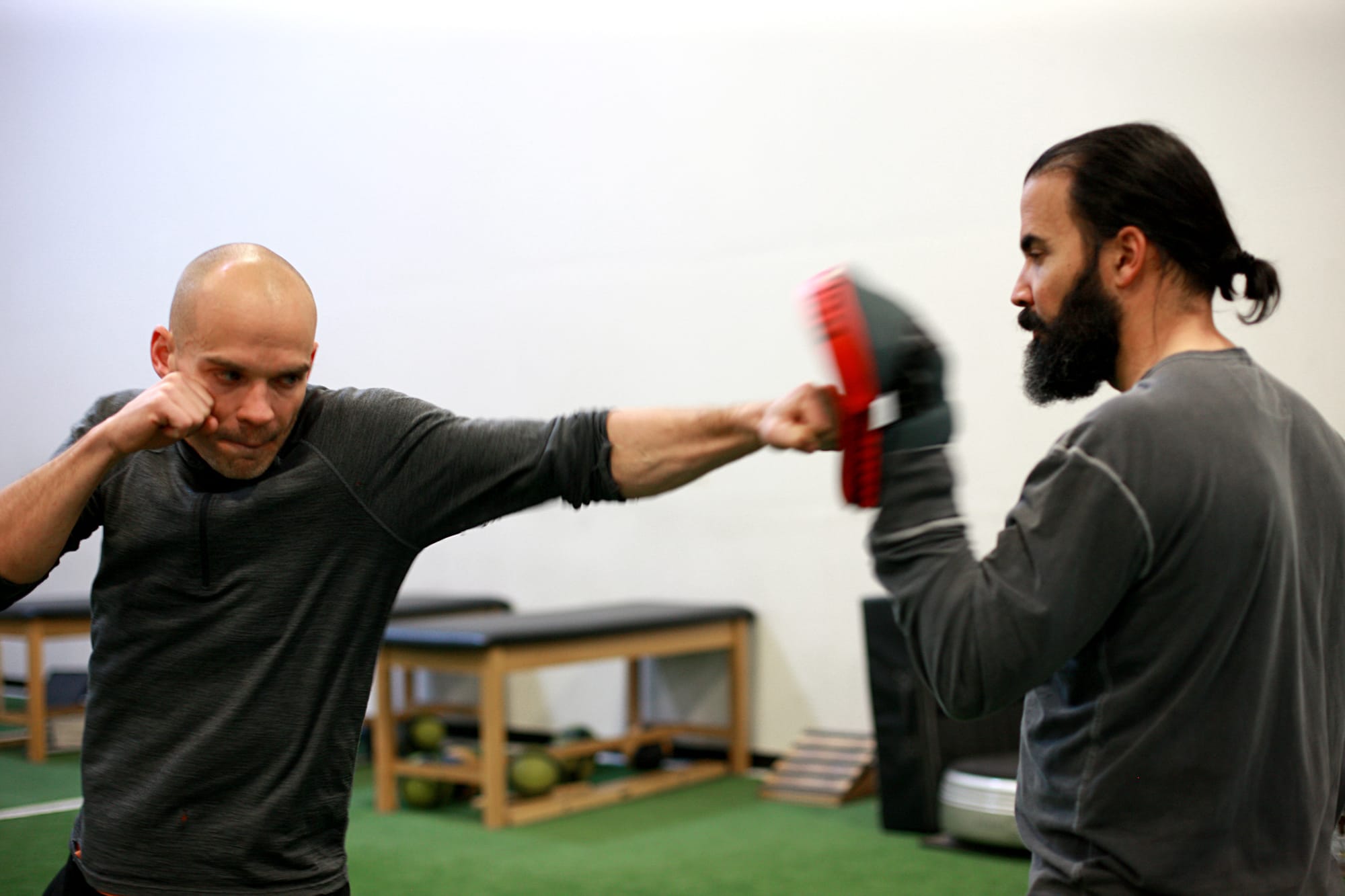
Coaching Dominic Rodriguez through medicine ball progressions provides a clear look at movement development in action. Rather than starting on feet with high systemic fatigue, we stage the demands:
Isolates trunk rotation and pelvic bracing without lower limb assistance.
Introduces asymmetry and demands pelvic stabilization from the hip flexor complex.
Integrates full kinetic chain triple extension followed by rapid concentric braking.
The athlete steps sideways dynamically, absorbing force and whipping through the hips into a solid wall—directly cultivating the rotational snap required for judo throws.
Ground Transitions & Get-Ups
Ground transitions—moving smoothly from back to elbow, hand, knee, and up to feet—are not decorative drills. They represent the foundational mechanics of guard recovery and standing up under resistance.
The Split-Squat Get-Up
Mirrors rising through an underhook against a heavy opponent's sprawl, requiring seamless force transmission from toes through torso.
Tripod Transitions
Builds three-point stability, allowing the athlete to protect their base and clear hips when opponent pressure collapses their posture.
The Transfer Principle
Transfer is task-dependent, not established by visual similarity. Adding resistance bands to a throw execution does not teach better judo; it corrupts the fine motor timing of the grip and foot sweep. Transfer happens when supplementary training expands movement capacity, joint resilience, and energy systems so that sport skill can be practiced cleanly without breakdown.
Judo as the Main Course: Supplementary Work as Support
For the athletes I work with, judo is the main course. The supplementary program is more like vitamins and minerals: it should support the main work, not displace it.
When strength and conditioning becomes an end in itself, athletes burn critical recovery capacity competing in the weight room rather than sharpening their craft on the mat. Our objective is an integrated physical practice where floor locomotion, odd-object manipulation, and natural agility elevate athletic capability while keeping the athlete fresh and durable.
“The program provides direction, but the athlete provides the information we need to coach. The goal is not to make the athlete better at following the plan. It is to make the plan more useful to the athlete.”
The Athlete-Centered Coaching Mandate
MovNat Combat Conditioning Guidelines
- Prioritize multi-planar movement and ground mobility before prescribing axial barbell loads.
- Track internal autonomic strain over rigid percentage prescriptions to protect combat practice.
- Progress movement complexity through constraints and leverage before simply adding load.
- Preserve joint health and systemic recovery so the athlete's best performance happens on the mat.

ABOUT THE AUTHOR:
Brian Betancourt
Director of Curriculum & Performance
A movement strategist and exercise physiologist with over a decade of experience coaching athletes, leading performance programs, and designing educational systems. As MovNat’s Director of Curriculum and Performance, Betancourt is responsible for evolving the brand’s instructional framework, certification pathways, and benchmark systems to meet the needs of a modern, capability-driven audience.
Get Started With Natural Movement Fitness – TODAY!
The MovNat Level 1 Certification is your entry point into the world’s official Natural Movement® Fitness program. It equips you with the knowledge, skills, and methods you need to transform your movement & fitness and build real world capability from the ground up. You’ll learn not only the movements in the official MovNat curriculum, but also the methods to apply those movements to your unique needs, goals, and circumstances.
MovNat has helped thousands of people from all walks of life restore their natural abilities and lay a foundation for a deeper, lifelong movement practice. We are the original, official, and only Natural Movement® Fitness certification, with thousands of certified professionals and dozens of MovNat Licensed Facilities all around the world.
Whether you’re completely new to Natural Movement Fitness, or a seasoned veteran looking to expand your skillset, the MovNat Level 1 Certification is your launchpad to a deep understanding of natural human movement, how to integrate it into your training and lifestyle, and help others do the same.


Want to get Started at Home?
Start today with our MovNat e-course! Our MovNat e-courses make it easy to train Natural Movement anytime, anywhere. You can choose from individual e-courses with lifetime access or enjoy unlimited learning through a monthly or yearly subscription. A great place to begin is our MovNat e-course Starter Bundle, the perfect way to build your foundation and start moving naturally today.
